

Hand Filler: What It Is, How It Works, and What to Expect

28
Sep
2026
Your hands reveal changes associated with aging just as much as your face does. Over time, the skin on the backs of your hands naturally thins out, while the soft tissue layer underneath gradually loses its youthful volume. As that cushioning diminishes, underlying veins, tendons, and bony structures become far more noticeable, giving the hands a crepey, skeletal, or prematurely aged look.
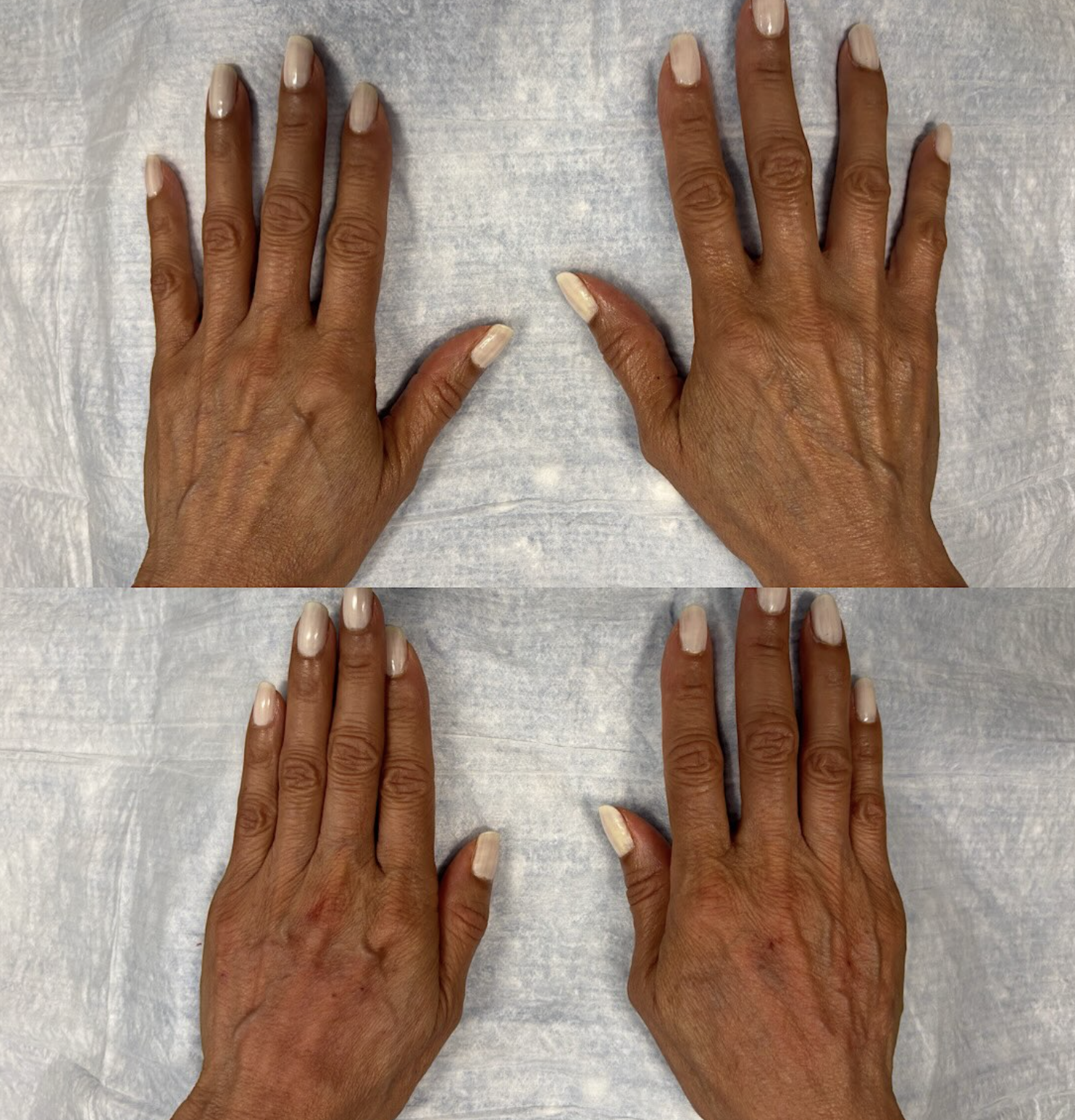
Hand filler is an effective aesthetic treatment designed to restore lost volume to the backs of the hands. Rather than altering the natural shape of your hands dramatically, the goal is to build a smoother, softer transition between the surface skin and the underlying structures—keeping everything looking refreshingly natural.
What Is Hand Filler?
Hand filler is a specialized injectable treatment used to correct volume loss across the dorsum (the back) of the hands. Depending on your anatomical needs and specific treatment plan, advanced dermal fillers such as hyaluronic acid (HA) or calcium hydroxylapatite (CaHA) are commonly selected for hand rejuvenation.
In the United States, specific dermal fillers carry FDA-approved indications precisely for correcting volume deficits in the backs of the hands. For instance, FDA approval covers Radiesse for hand augmentation to restore lost volume in the dorsal hand area, while Restylane Lyft with Lidocaine is FDA-approved for injection into the subcutaneous plane of the dorsal hand to treat volume loss in adults over 21.
Treating the hands is fundamentally different from injecting facial fillers. The delicate anatomy, constant movement, and distinct skin depth of the hands demand a unique clinical approach. A thorough, personalized evaluation is an essential first step before deciding if filler is the right path for you.
Why Do Hands Lose Volume With Age?
Aging affects far more than just the surface of your skin. Over time, the hands undergo gradual shifts across their skin density, connective tissue layers, fat compartments, and deeper structural supports.
As the skin loses thickness and elasticity, the soft-tissue padding that once cushioned your tendons and veins slowly thins out. As a direct result, those deeper structural elements show through much more prominently.
Sun exposure plays a huge role in this process, too. Cumulative UV damage over the years leads to stubborn pigmentation, uneven skin tone, chronic dryness, and accelerated textural breakdown.
This means that hand aging is rarely caused by volume loss alone. While one person might be bothered mostly by bulging veins and tendons, someone else might be concerned about thin, crepey skin, dark age spots, or a combination of all three.
How Does Hand Filler Work?
When filler is precisely placed into the correct tissue layer on the back of the hand, it instantly replaces the soft-tissue cushion that has degraded over time.
This added volume creates a seamless, smooth bridge between the skin and the underlying anatomy. Veins and tendons instantly look less prominent, transforming a bony contour into a softer, plumper, and more youthful appearance.
While some fillers focus purely on immediate volumizing effects, other formulations also help improve the overall quality and density of the surrounding skin over time through their unique material properties and collagen-stimulating effects.
The exact product chosen, the volume used, and the injection technique applied will always depend on your unique anatomy and the degree of volume loss present.
What Concerns Can Hand Filler Address?
Hand filler is engineered primarily to replace lost volume, but restoring that underlying cushion produces a domino effect that improves several visible signs of aging.
It can significantly soften the look of:
- Prominent or protruding veins
- Highlighting tendons
- Hollowed, sunken gaps between the metacarpal bones
- A bony or skeletal hand structure
- Loss of soft-tissue fullness
- Harsh, uneven transitions between the skin and underlying structures
It is equally important to know what filler cannot do. Filler is not a surface treatment, so it will not erase sun spots, dark pigmentation, or surface-level sun damage.
If your hands show a mix of volume loss alongside deep pigmentation, dryness, or rough texture, those surface issues will need to be addressed using targeted skin-rejuvenation treatments alongside your filler.
Hand Filler vs. Skin Treatments for the Hands
Restoring lost volume and improving surface skin quality address two entirely different layers of the hand.
Dermal fillers work beneath the surface to restore structural soft-tissue support. On the flip side, skin-focused procedures—such as laser resurfacing, chemical peels, or targeted topical therapies—are designed to target hyperpigmentation, rough texture, and sun damage on the outer layer.
Recognizing this difference is vital because plumping up the hands will not automatically clean up dark spots or surface crepiness.
For someone experiencing both deep volume loss and significant sun damage, the most effective rejuvenation plan will combine volume restoration with targeted skin-refining treatments.
What Happens During a Hand Filler Treatment?
Your treatment begins with a detailed visual and tactile evaluation of the backs of your hands. Your provider will analyze the extent and pattern of volume loss, the visibility of veins and tendons, overall skin elasticity, and the underlying structural layout.
Next, the chosen filler is meticulously placed into the accurate anatomical tissue layer.
Because the hands are in constant motion and house complex networks of nerves, blood vessels, and tendons, precise placement is paramount. The goal is never to create an artificially puffy look, but rather to restore just enough balance to yield a subtle, youthful, and harmonious contour.
The injection process itself is relatively quick, though your overall appointment time will depend on your tailored plan and whether you are combining filler with other rejuvenation steps.
What Can You Expect After Treatment?
It is completely normal to experience mild swelling, tenderness, redness, or minor bruising around the injection sites. These temporary side effects usually clear up quickly, though individual recovery times naturally vary.
Your hands will look noticeably fuller right away, but keep in mind that early post-treatment swelling can briefly exaggerate the results. As the product integrates and the swelling subsides over the following days, your true, smooth outcome will settle in.
Your provider may advise you to temporarily avoid strenuous activities, heavy lifting, or placing direct pressure on the backs of your hands while they heal.
It is also vital to respect filler as a precise medical procedure rather than a basic cosmetic add-on. Although serious complications are rare in experienced hands, injectable procedures carry inherent risks, including vascular compromise or tissue trauma. Minimizing these risks comes down to choosing a qualified injector with deep anatomical expertise.
How Long Does Hand Filler Last?
The longevity of hand filler varies based on the specific material used, the amount injected, your metabolic rate, and how active you are with your hands.
Certain hyaluronic acid fillers are temporary and naturally break down and absorb into the body over several months. Other biostimulatory fillers offer longer-lasting structure while encouraging your body to build its own collagen for extended tissue quality.
Because duration varies widely from person to person, it is best to view hand filler as part of an ongoing, long-term maintenance routine rather than a single permanent fix. Your provider will give you a realistic timeline based on the exact filler product selected for your treatment.
Who May Be a Candidate for Hand Filler?
Hand filler is an excellent option for adults who notice thinning or hollowed skin on the backs of their hands and want to restore the soft fullness they used to have.
A proper clinical consultation is essential because not every aesthetic change in the hand stems from volume loss. Visible veins, skin discoloration, structural laxity, and joint changes all require a tailored diagnostic eye.
Candidates with certain underlying medical conditions, active skin infections, or known allergies to specific filler ingredients may not be suitable candidates for treatment. Every procedure should be chosen based on a careful review of your medical history, structural anatomy, and personal goals.
A More Complete Approach to Hand Rejuvenation
The appearance of aging hands is almost never caused by one single issue. Volume loss tends to make veins and tendons stick out, while decades of sun exposure and natural collagen degradation leave behind dark spots, dryness, and fine surface lines.
That is why restoring volume is just one key piece of the hand-rejuvenation puzzle.
A comprehensive treatment plan focuses on what is actually driving the aged appearance rather than assuming filler is a silver bullet for every concern. While replacing lost volume makes a massive difference for many, pairing it with dedicated skin treatments ensures your hands look smooth, radiant, and naturally refreshed from every angle.
The ultimate goal isn't to dramatically alter your hands, but to restore the soft, plump vitality that time has stripped away—all while preserving your hands' natural movement, character, and beauty.